
Aava Tea
Branding, Typography, Packaging
Branding, Typography, Packaging
This project explores how typography and packaging design can serve as a sensory expression of cultural identity. Inspired by the Indian tradition of chai, Aava translates the ritual of tea-making into a cohesive visual language — where label layouts, typographic hierarchy, and material form work together to evoke warmth, heritage, and craft. While each product variant carries its own character, all pieces remain unified through a consistent visual system and tactile sensibility. Designed as a premium tea brand, Aava transforms an everyday tradition into a considered artifact — inviting the world to connect with Indian culture not through symbols or clichés, but through the quiet intimacy of a shared cup.
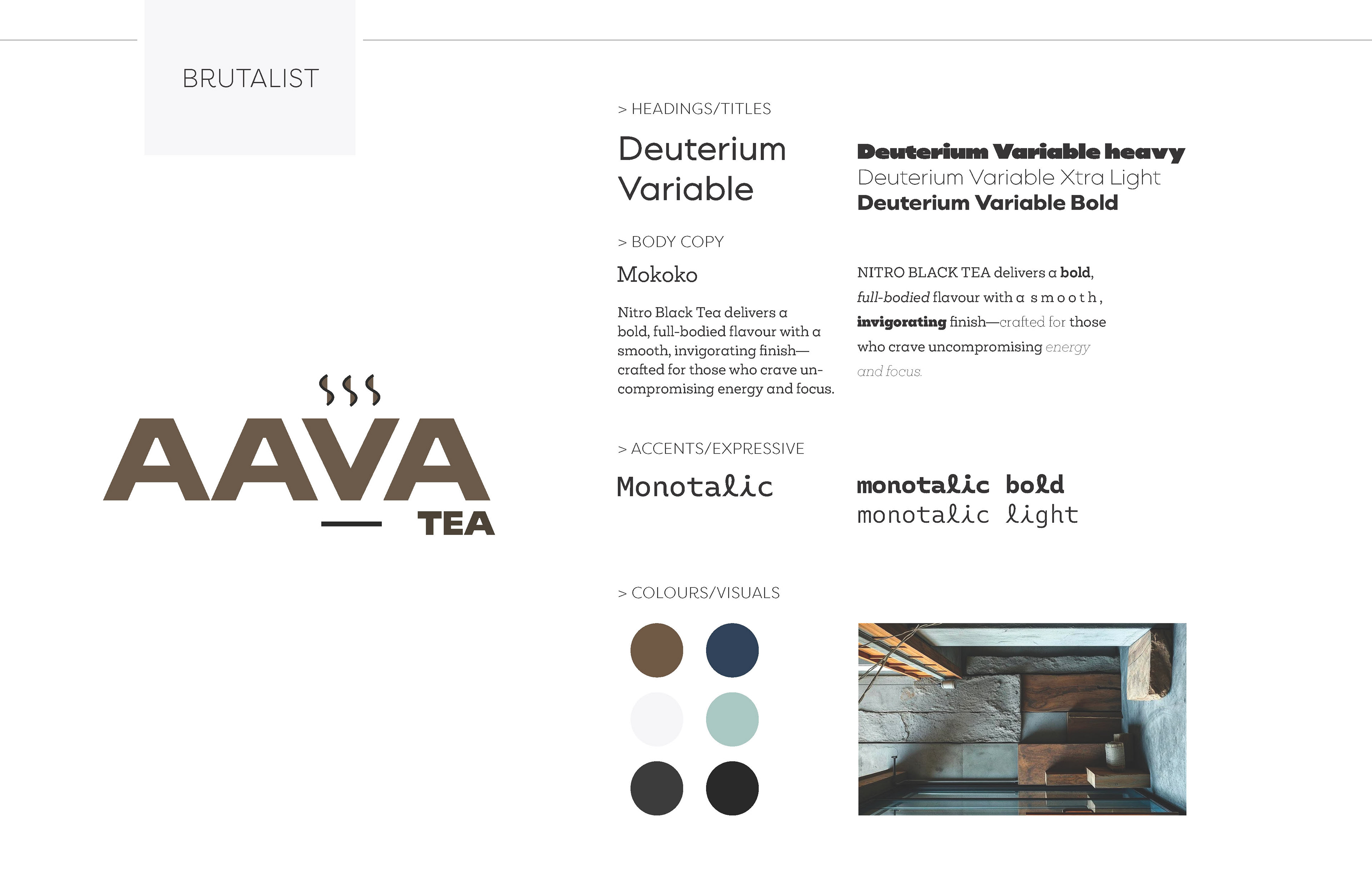
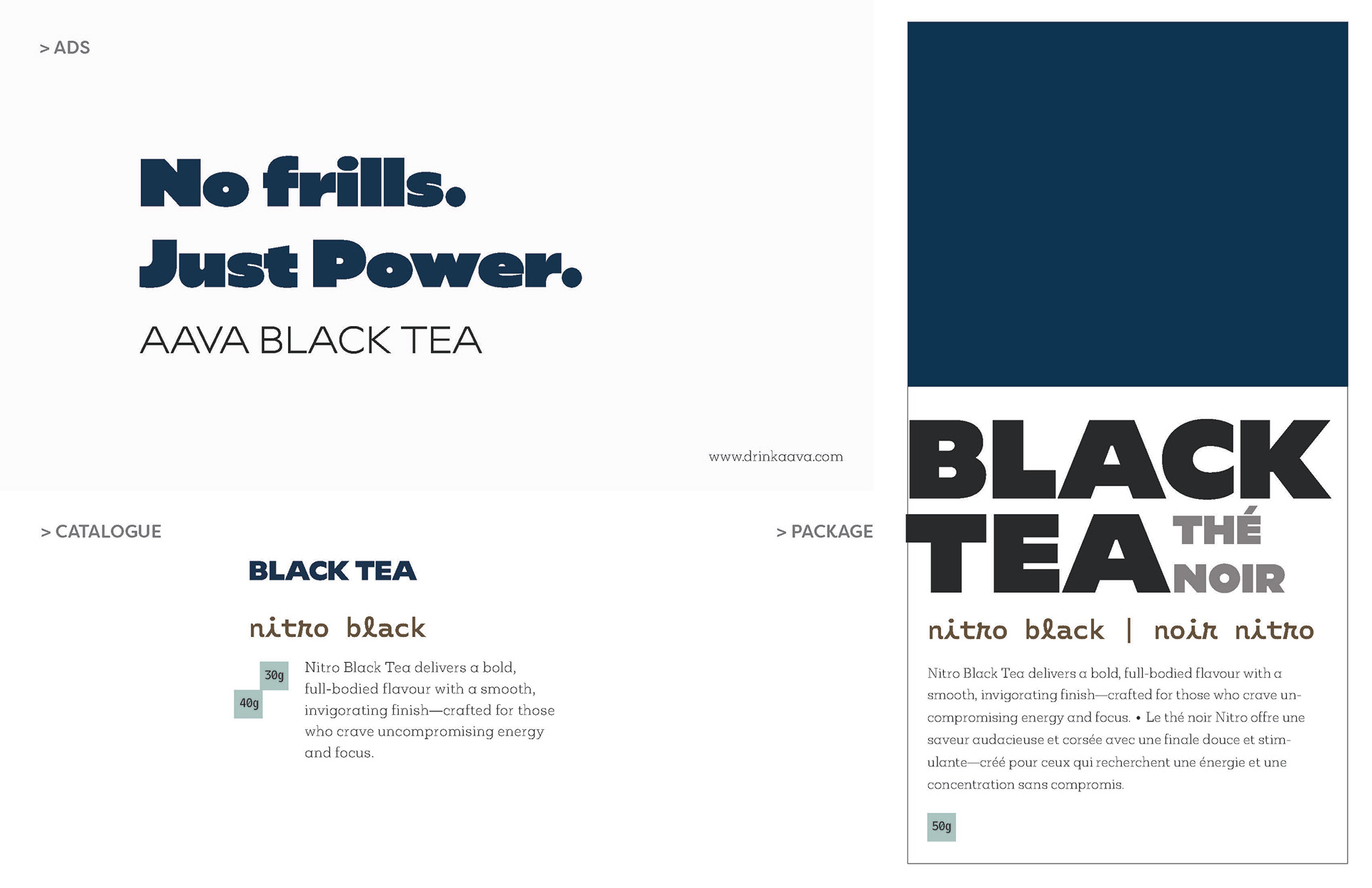
branding exploration ───────────────────────────────────────────────────────────────────────
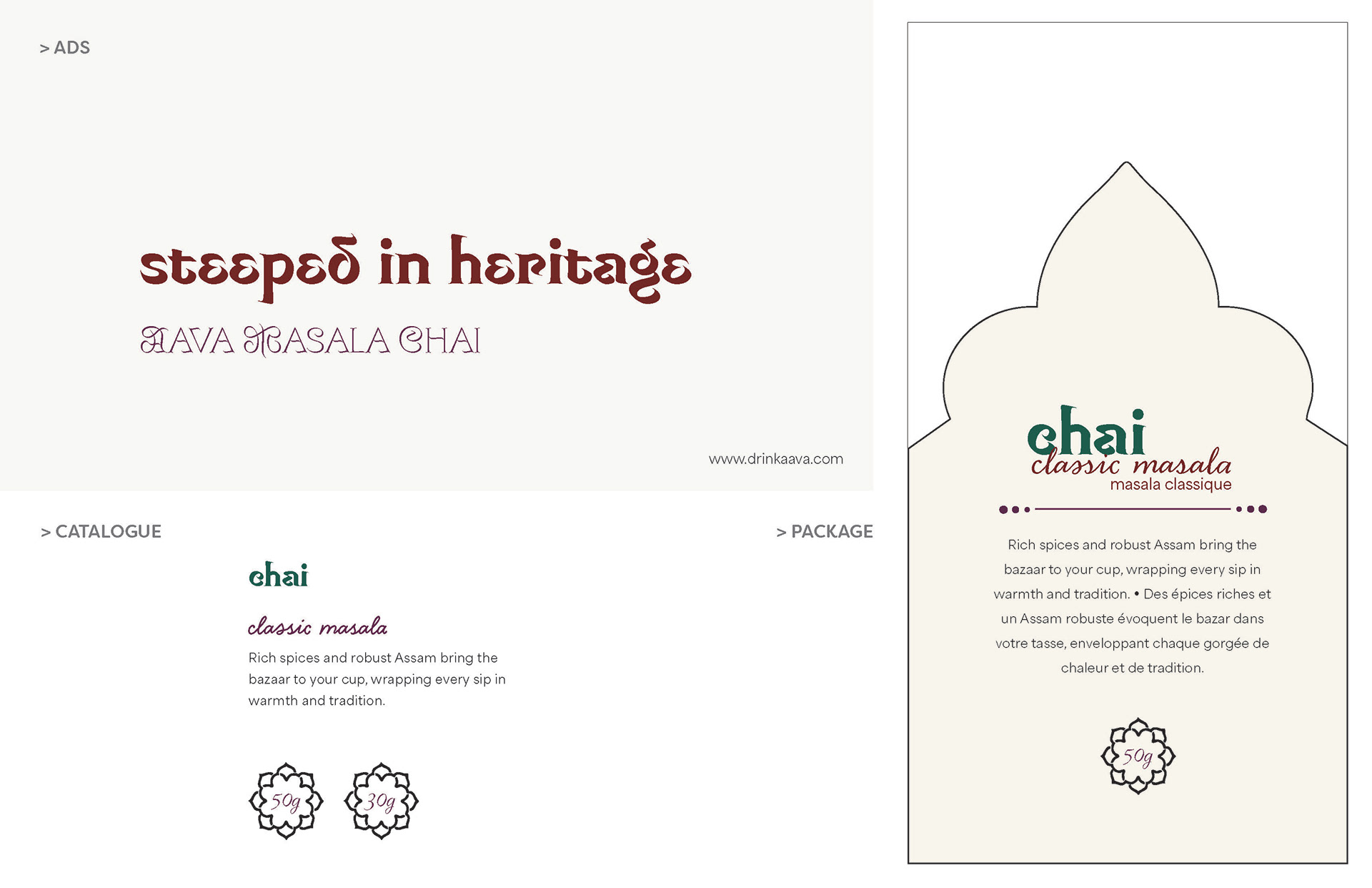
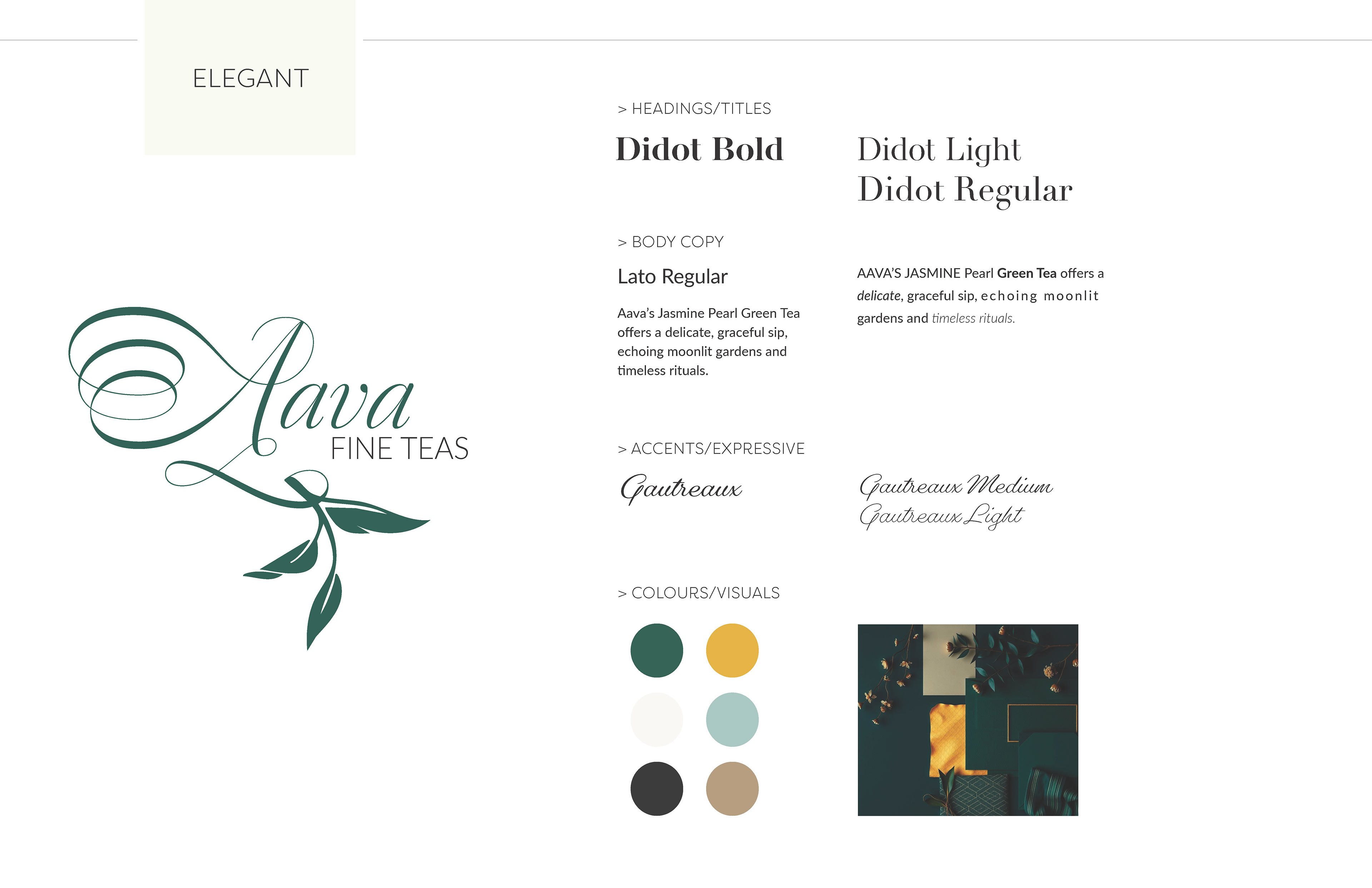
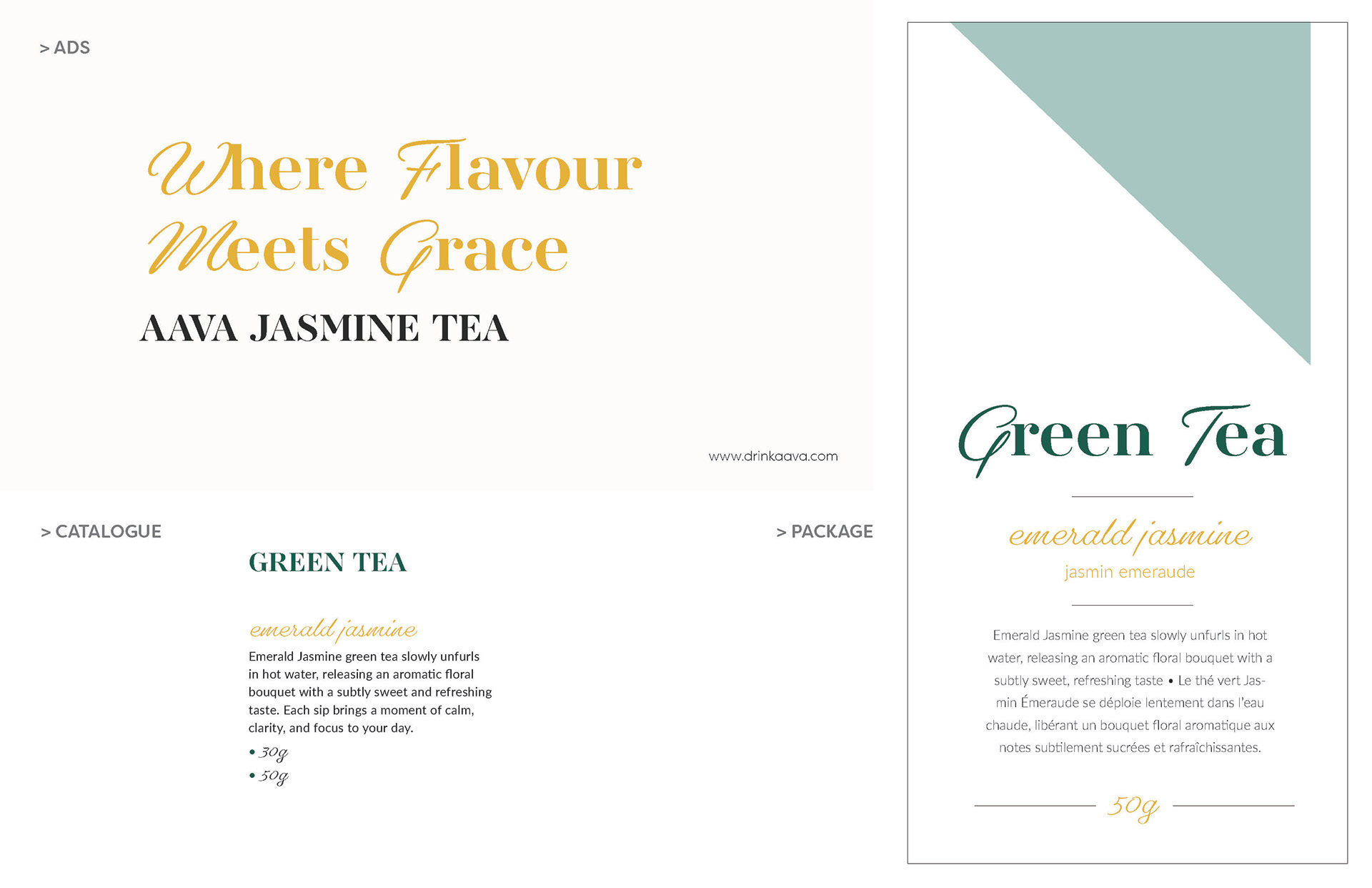
Tea cataloGUe ────────────────────────────────────────────────────────────────────────────
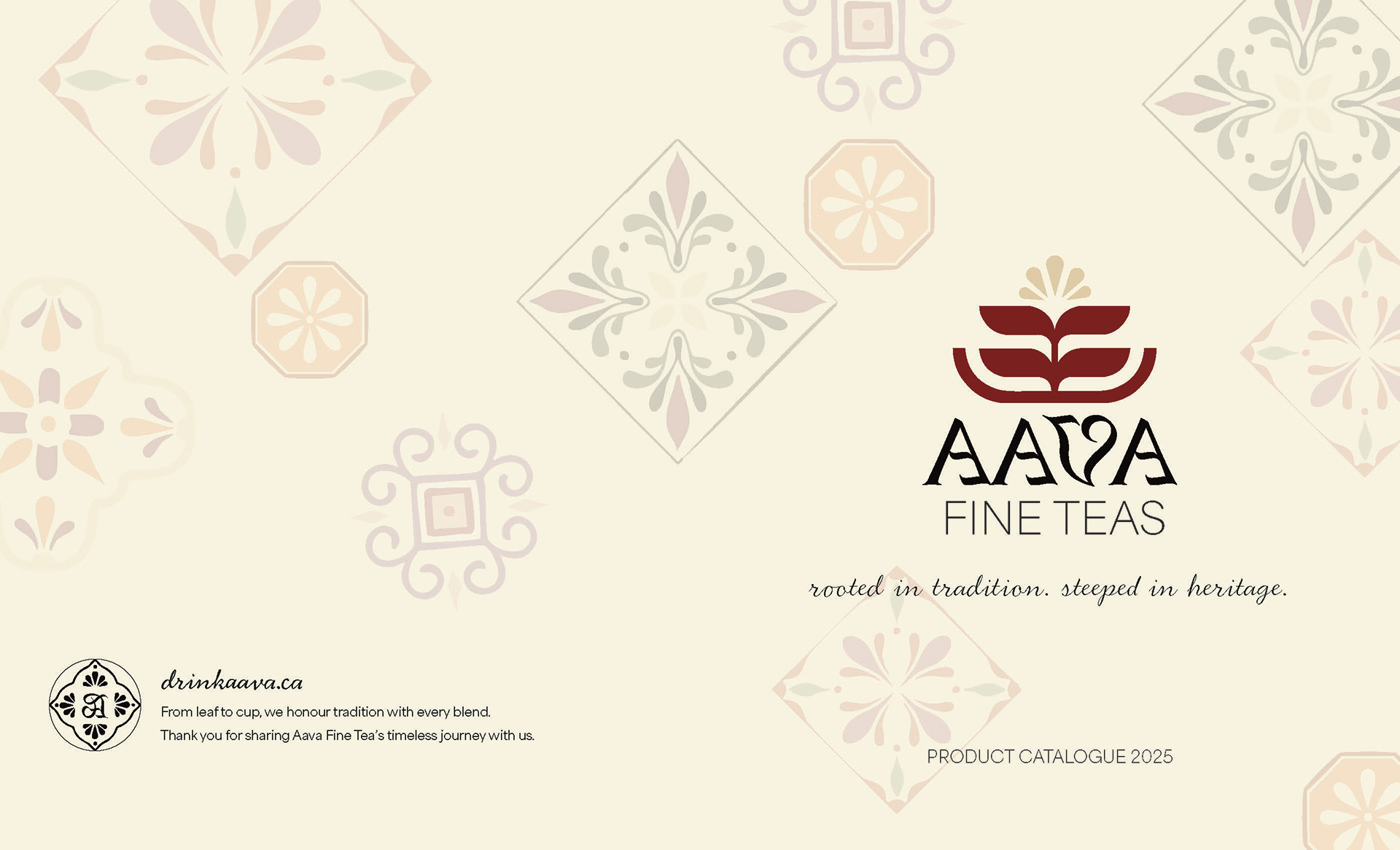
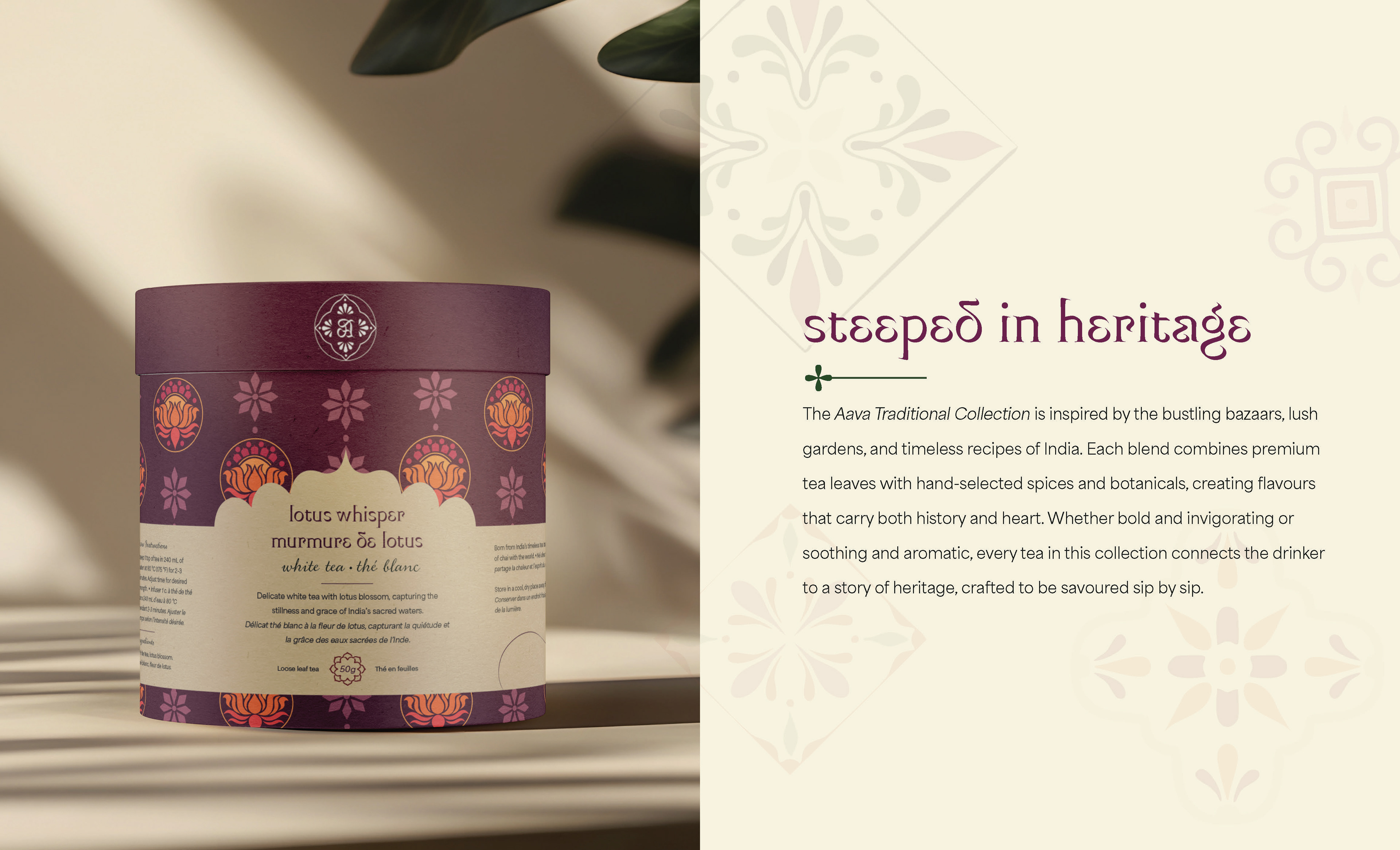
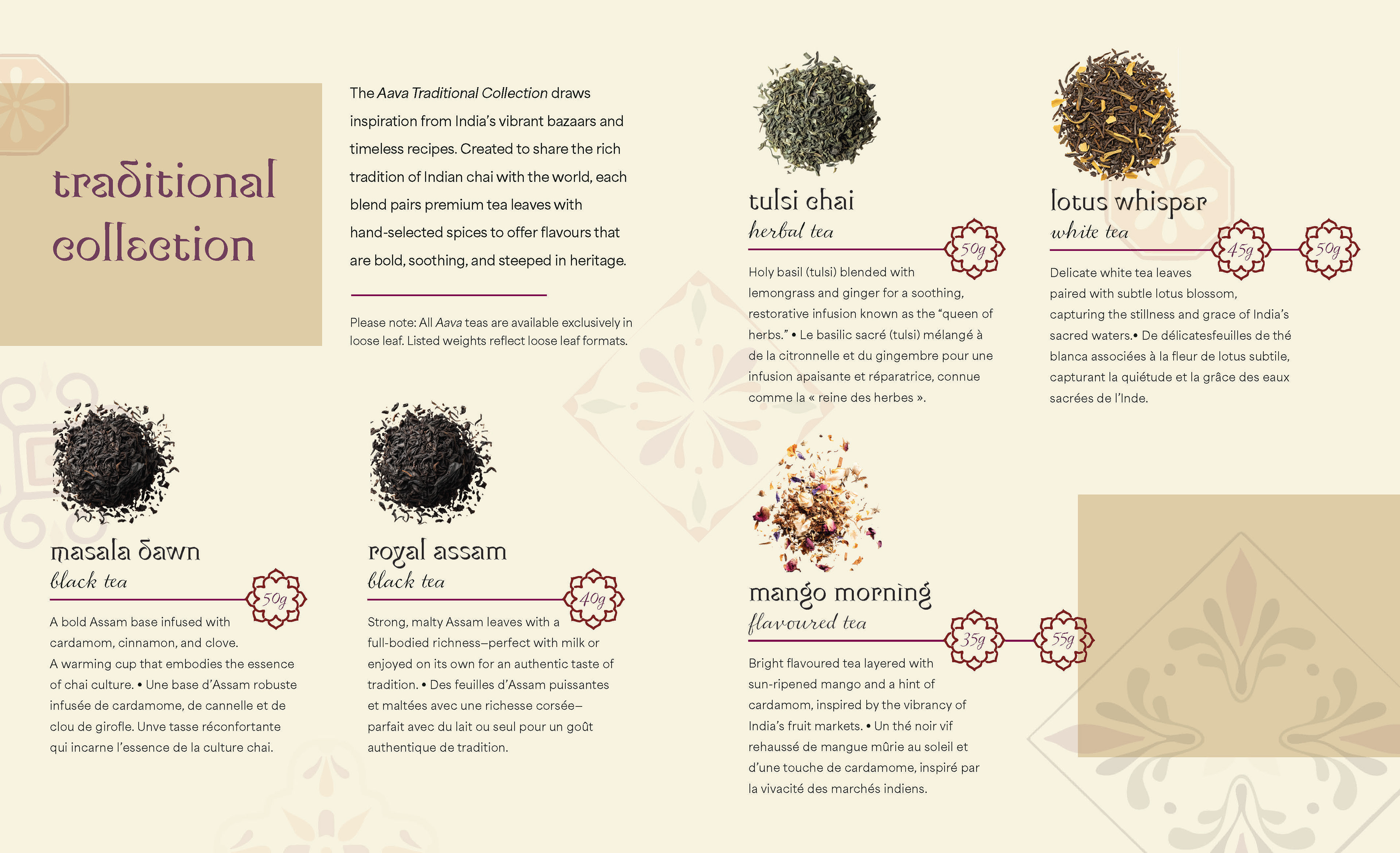
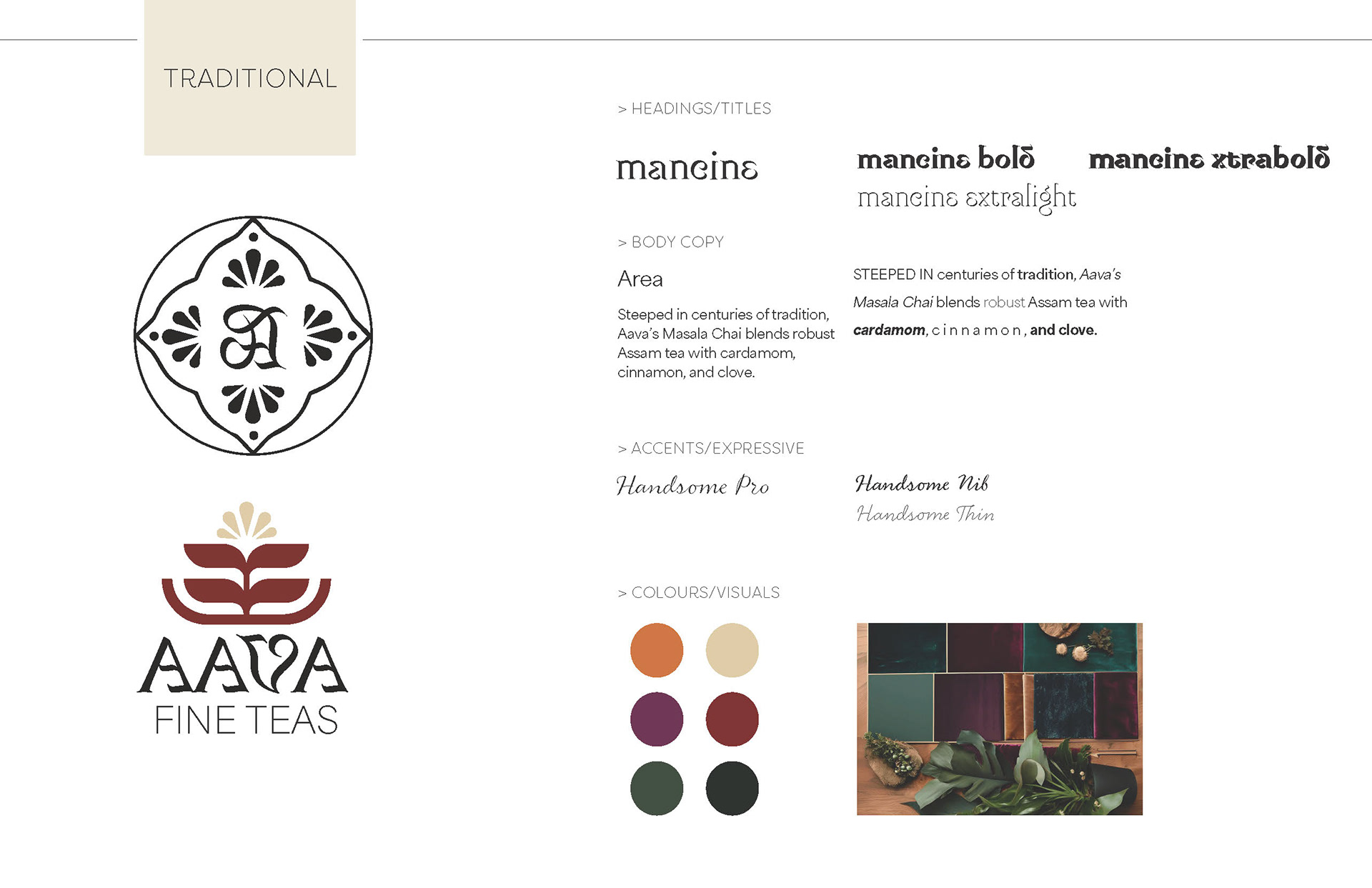
For this project, I pursued a traditional branding direction as a means of weaving my cultural heritage into the work. The research process was particularly meaningful — exploring tea names rooted in centuries of Indian culture and identifying staple ingredients that carry both historical and regional significance. Designing the mandala motifs, drawn from henna artistry and crafted in Illustrator, was an especially rewarding part of the process. As someone deeply passionate about henna, I welcomed the opportunity to bring traditional Indian art forms into a contemporary design context.
Packaging ───────────────────────────────────────────────────────────────────────────────
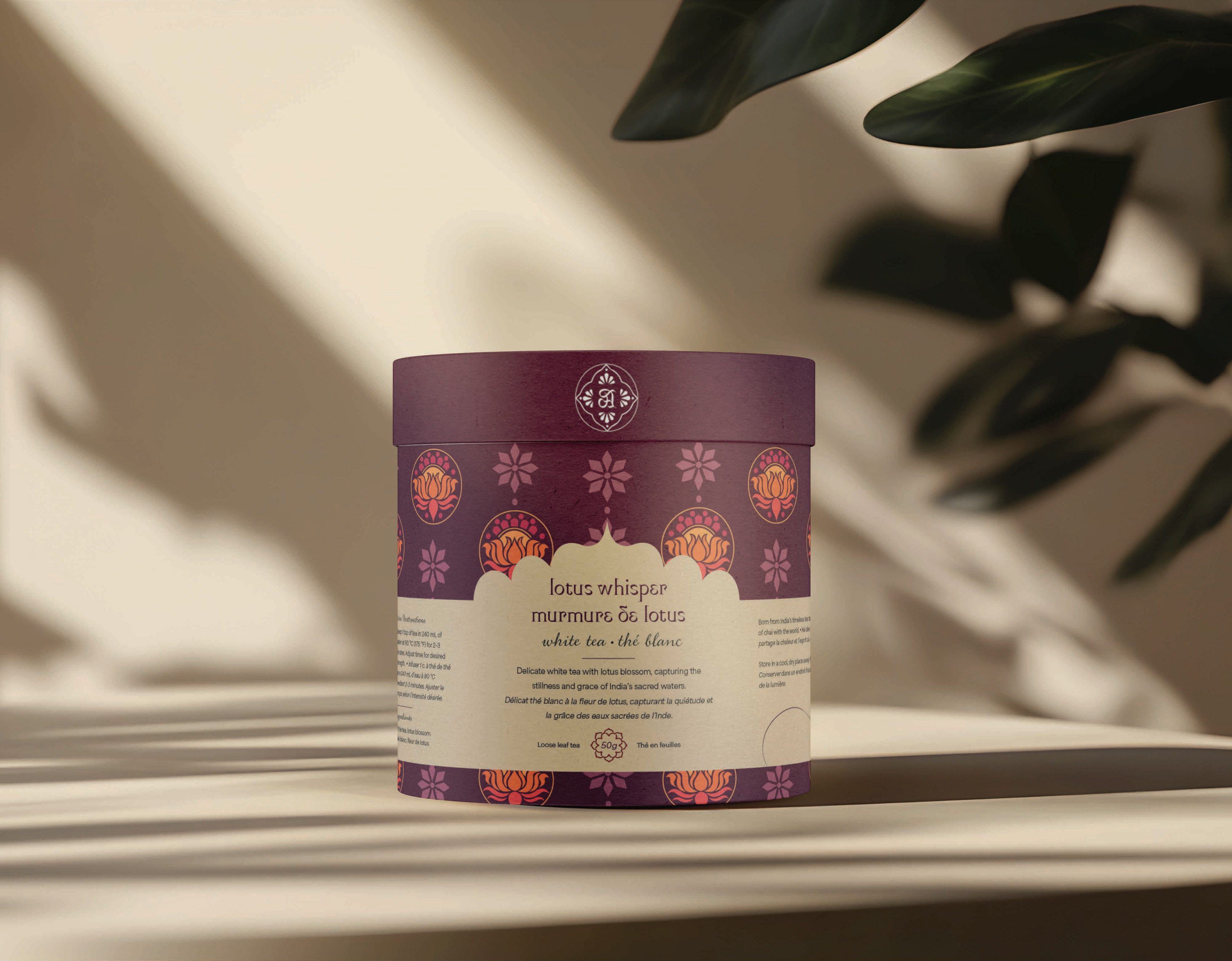
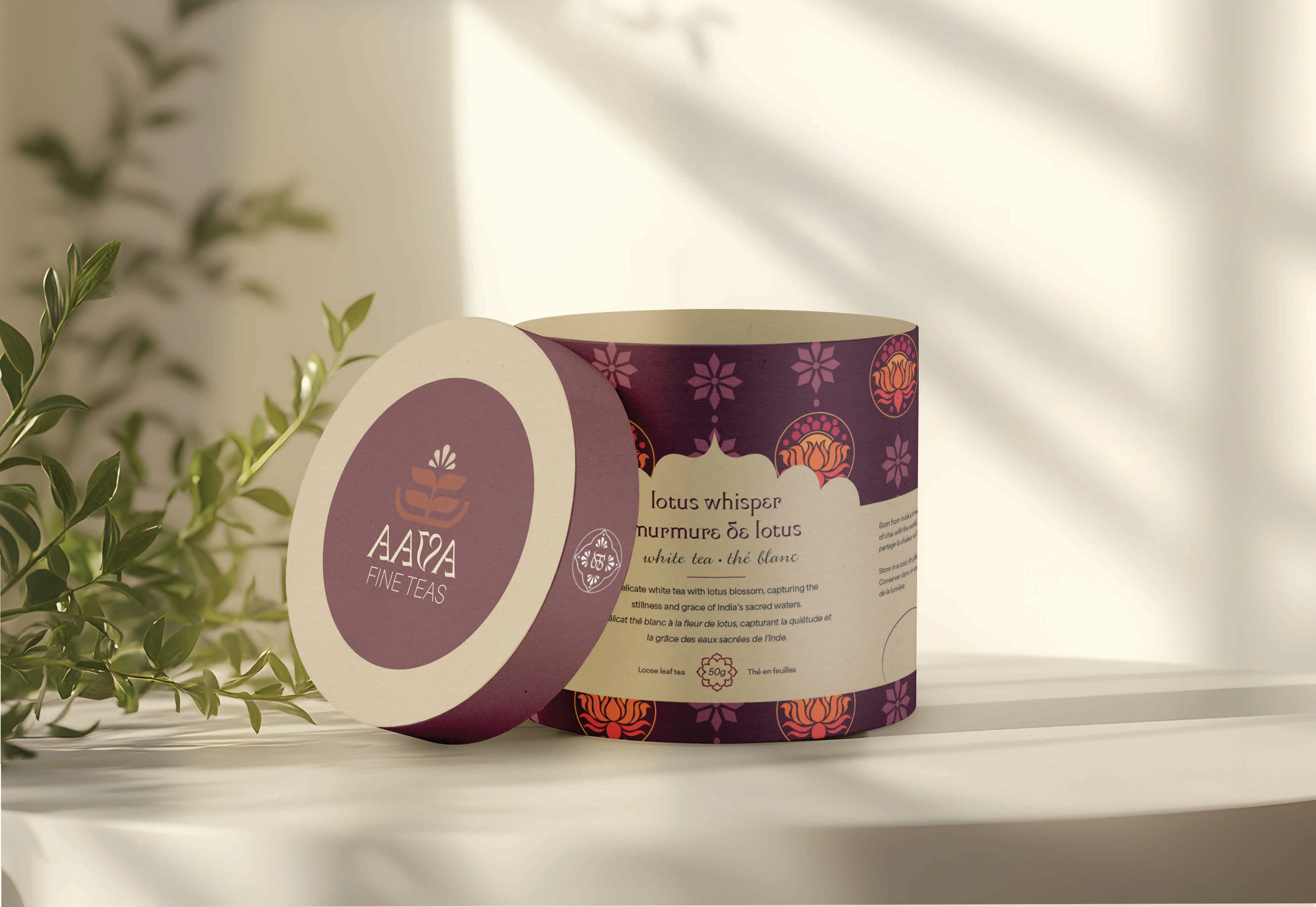
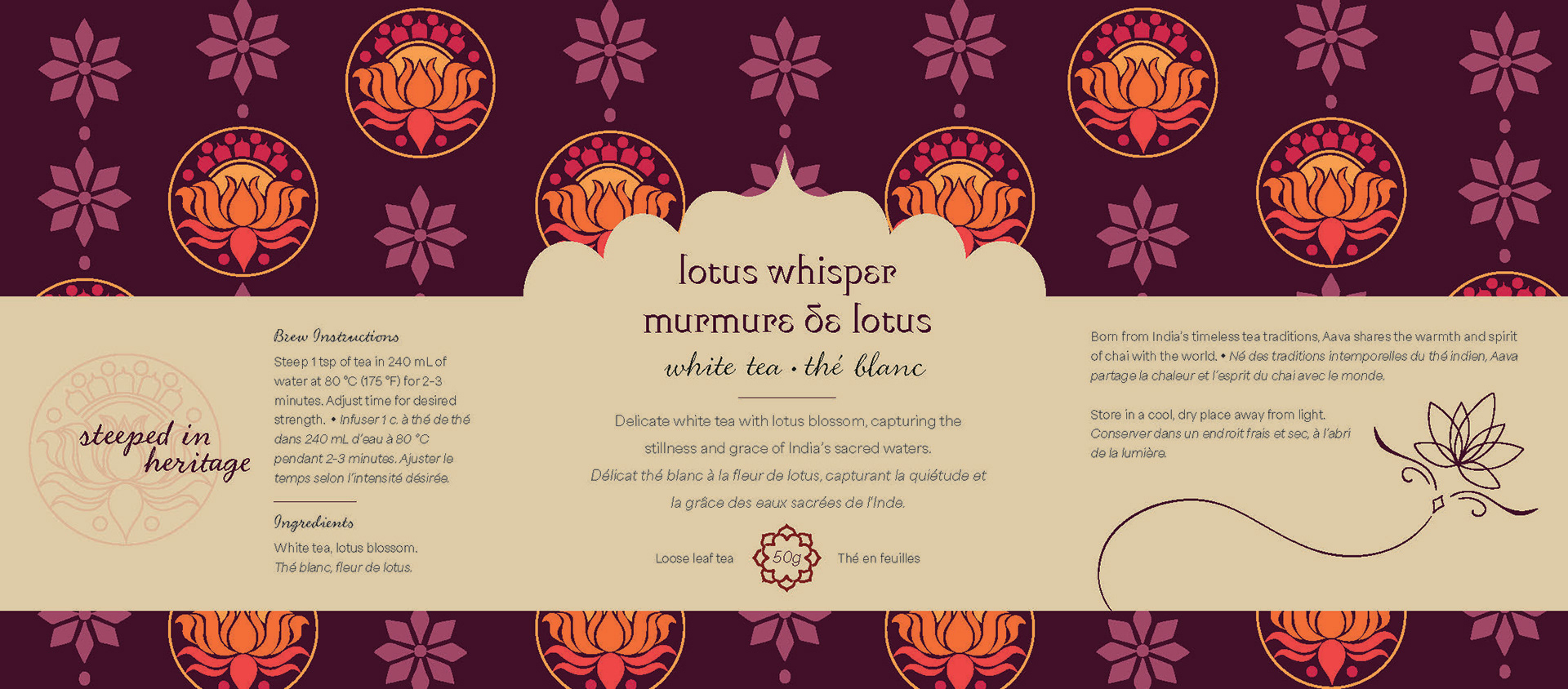
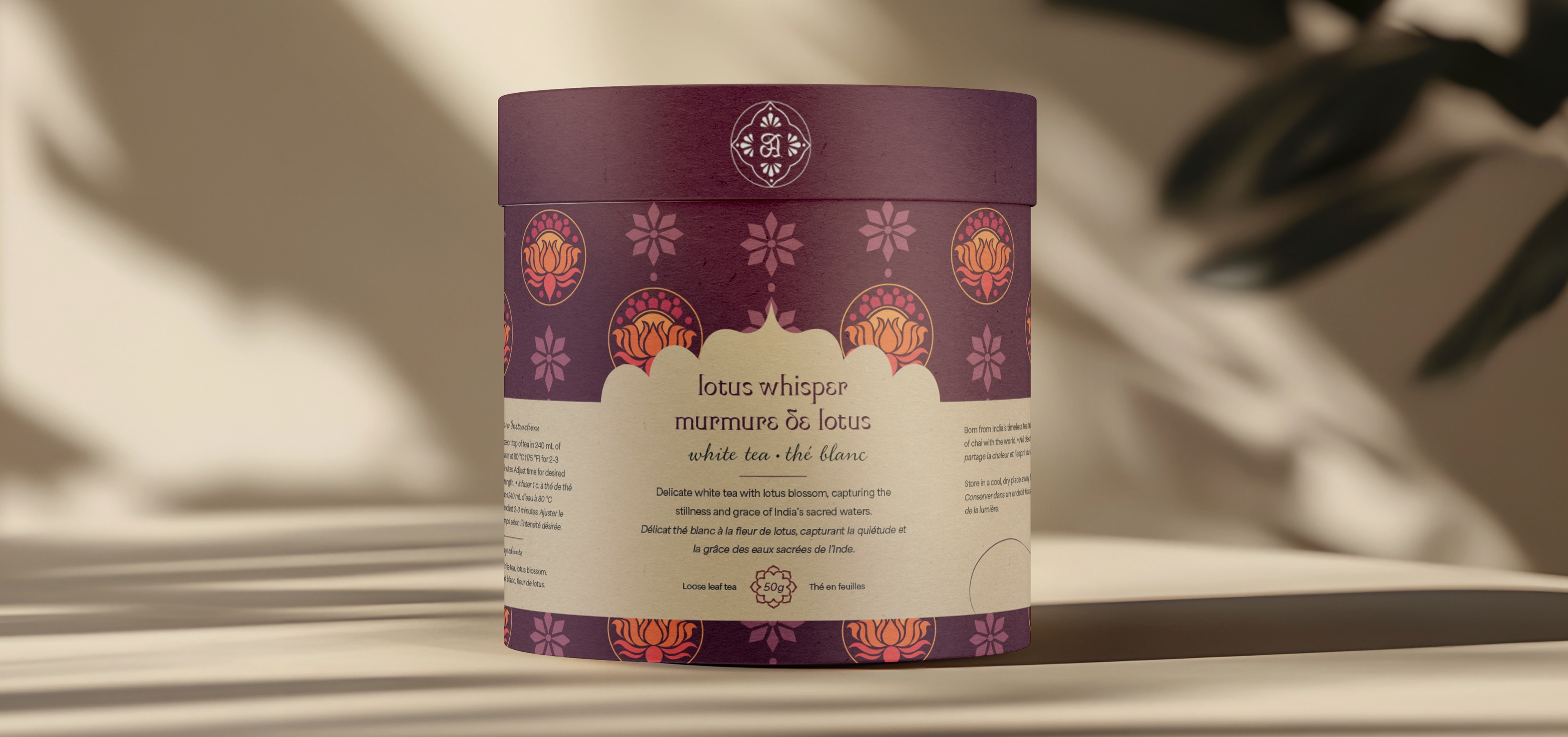
For the Lotus Whisper packaging — a white tea with lotus blossom — I drew inspiration from the Madhubani art style, incorporating its signature repetitive lotus motifs to create a design that feels both deeply rooted and visually meditative. The lotus, India's national flower, carries profound symbolic weight: representing purity, spirituality, fertility, and enlightenment, it holds a prominent place in ancient Indian beliefs and remains a cornerstone of religious rituals, traditional art, and sacred architecture.
Madhubani, also known as Mithila painting, is a vibrant Indian folk art form characterized by geometric patterns, bold outlines, and richly symbolic imagery. Originating in the Mithila region of Bihar and Nepal, it has journeyed from humble mud wall paintings to a celebrated global art form — making it a fitting visual language for a tea that seeks to capture the stillness and grace of India's sacred waters. The result is packaging that does not simply contain a product, but tells a story.